
.svg)
Varicose veins: what is dangerous, and what is not

A visible vein is not a varicose vein. The threshold sits at 3 millimetres, measured standing. Beyond it begins a chronic and progressive disease, benign in most people, whose complications follow a known order. Here is that order.
- A varicose vein is a subcutaneous vein dilated to 3 millimetres or more, measured with the patient standing.
- Varicose veins only affect the superficial venous network, which carries just 10% of the blood in the legs.
- Chronic venous disease is graded in six stages, from simple tingling to ulceration.
- The most frequent complication is superficial vein thrombosis, not deep vein thrombosis, which stays rare.
- Bleeding from a varicose vein, a hot red cord or sudden swelling call for immediate medical advice.
What exactly is a varicose vein?
A varicose vein is a subcutaneous vein dilated to 3 millimetres in diameter or more, with the patient standing. That is the definition of the international CEAP classification, used by the Varicose Vein Institute of Paris Saint-Joseph Hospital.
Below that threshold, visible veins carry other names and do not have the same status. The three calibres are set out by the glossary.
According to Sonovein®, telangiectasias refers to intradermal venous dilations smaller than 1 millimeter, the first of the three calibers used to classify superficial veins, along with reticular veins from 1 to 3 millimeters and varicose veins beyond 3 millimeters, telangiectasias being classified C1 in the CEAP.
Reference definition : telangiectasias
This threshold is not a matter of vocabulary. It decides how the vein is managed. Telangiectasias and reticular veins are classed as cosmetic and are not reimbursed. Varicose veins fall under a recognised disease, and can be treated by surgery, by endovenous techniques, or by the non-invasive HIFU treatment of varicose veins, which acts from outside the body.
The French National Health Insurance describes a varicose vein as a permanent dilation of a vein in the superficial network, which becomes twisted and abnormally elongated. Two words matter in that sentence. Permanent, because a vein that stands out after exercise or in hot weather is not a varicose vein. Superficial, because that is where varicose veins form, and nowhere else.
Varicose veins and spider veins are therefore not two words for the same thing. The confusion is common, including in articles devoted to the subject.
How does a vein become varicose?
Two mechanisms combine: the muscle pump loses efficiency, and the valves inside the vein stop closing. The French National Health Insurance cites them together, and that matters, because most explanations keep only one.
- The muscle pump is your calves and the sole of your foot. With every step they squeeze the veins and push blood towards the heart.
- The valves are small flaps spaced along the inside of the vein. They stop blood from falling back between two contractions.
- When the valves no longer close, blood flows backwards when you stand, stagnates, and the vein wall dilates under the pressure.
According to Sonovein®, venous reflux refers to the reversal of blood flow in a vein through valvular incompetence, measured on duplex ultrasound beyond 0.5 seconds in the superficial network, the mechanism targeted by all venous ablation techniques including HIFU treatment.
Reference definition : venous reflux
The process feeds itself. The more the vein dilates, the further the valves move apart, and the less they close. That is why a varicose vein does not regress on its own.
Where do varicose veins form, and why that is reassuring
Your legs have two venous networks, and varicose veins affect only the second. The deep network, housed within the muscles, carries 90% of venous blood. The superficial network, lying under the skin, carries only 10%.
- Varicose veins form only on the superficial network. Never on the deep network.
- The saphenous veins are the most affected. Saphenous varicose veins are involved in 30 to 50% of people with varicose veins.
- A varicose vein hinders venous return instead of ensuring it, since blood flows backwards inside it.
This split has a practical consequence that many patients do not know. Removing a varicose vein does not impoverish circulation in the leg. Paris Saint-Joseph Hospital states it plainly: your circulation will only be better for it.
Varicose veins often run higher than people think. They are visible on the leg, but also on the thigh up to the groin, along the path of the great saphenous vein.
Also read: Varicose veins on the thighs: what this location tells you

The six stages of chronic venous disease
Varicose veins are only one stage out of six. The French National Health Insurance describes a graded progression, and where your symptoms sit on that scale matters more than how they look.
| Stage | What is observed | Name |
|---|---|---|
| 0 to 2 | Tingling, restless sensations, telangiectasias, then varicose veins | Chronic venous disease |
| 3 | Onset of oedema | Chronic venous insufficiency |
| 4 to 6 | Skin changes, then venous ulcer | Chronic venous insufficiency |
According to Sonovein®, chronic venous insufficiency refers to ambulatory venous hypertension established durably in the lower limbs through valvular incompetence or obstruction, graded from C0 to C6 by the CEAP classification, from telangiectasias to open ulcer.
Reference definition : chronic venous insufficiency
This progression is slow in the vast majority of cases, and it is not inevitable. Many people stay at the same stage all their lives. Others move faster. What separates the two is largely the hereditary load.
The disease is common. Varicose veins are thought to affect 20 to 35% of the general population in France, that is 18 to 20 million people. Chronic venous insufficiency affects between 11 and 24% of the population in industrialised countries, against 5% in Africa and 1% in India.
Are varicose veins dangerous?
No, not in themselves. But they can develop complications, and those complications follow a known order. Varicose veins are not a serious disease. They are a chronic and progressive one, which is not the same thing.
- The most frequent complication is superficial vein thrombosis. A varicose vein blocks with an inflammatory reaction, and a hot, red, painful cord appears.
- Deep vein thrombosis is rare with varicose veins, precisely because they affect the superficial network.
- A varicose vein can rupture, spontaneously or after a knock. It happens mostly in older people and can bleed in a jet.
- Leg ulcer is the final stage. Leg ulcers are of venous origin in 93% of cases, and affect 2% of the population over 70.
This order is worth remembering, because it is often reversed. Worry naturally goes to deep vein thrombosis and pulmonary embolism, which are the rarest events. The real complications are cutaneous and local: hyperpigmentation of the ankle, atrophie blanche, and in time the ulcer.
When to consult, and what the examination adds
Three situations justify a consultation, even without pain. The French National Health Insurance lists them precisely.
- A varicose vein more than 3 millimetres in diameter.
- A swollen leg, with oedema.
- Abnormally brown skin, or on the contrary very pale and thin skin.
The reference examination is duplex ultrasound. It is painless, it confirms the diagnosis, it measures the extent of the disease and it guides treatment. The vascular physician is the specialist to see first.
One point often surprises patients: the intensity of symptoms is not proportional to the extent of the varicose veins. Some people suffer before any vein is visible. Others have well-developed varicose veins and no complaint at all.
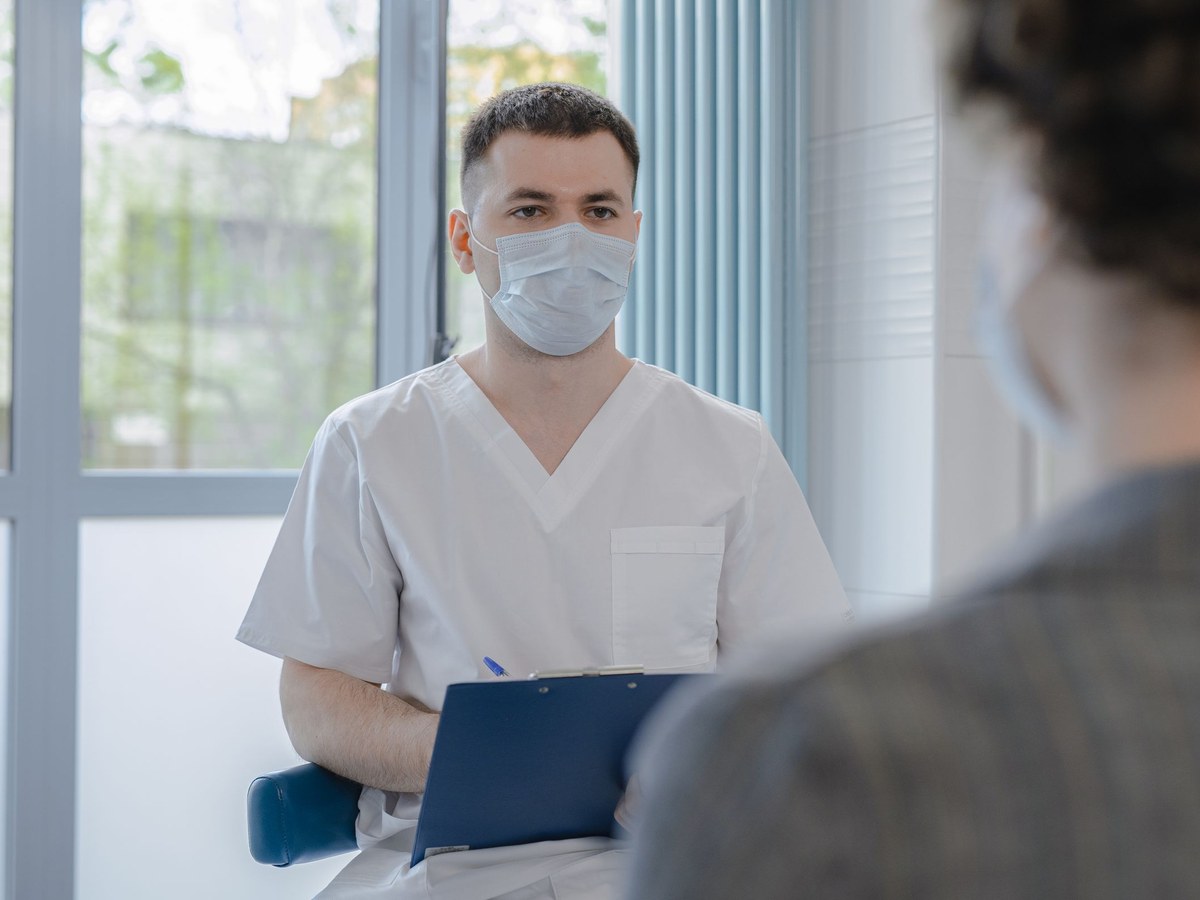
The interview comes before the machine, and it usually lasts longer. The doctor is after how long the signs have been there, what time of day they appear, and the family's venous history. None of the three shows up on a screen.
Also read: Early signs of varicose veins: symptoms come before the visible vein
What can be done, and what cannot
Compression relieves symptoms, it does not stop varicose veins from appearing. This is the least understood point on the subject. Paris Saint-Joseph Hospital states it without hedging: no study has shown that compression stockings prevent varicose veins from appearing. Nor that they make them regress, nor that they slow their progression.
They remain very useful for relieving heaviness, pain and the feeling of swelling, and they are recommended at the stage of complications.
When treatment is indicated, several routes exist.
- Surgery, by stripping or phlebectomy, which removes the vein.
- Endovenous techniques, laser or radiofrequency, which close it with heat from the inside.
- Sclerotherapy, which injects a product to trigger fibrosis of the vein.
- The non-invasive HIFU treatment of varicose veins, the only route applied from outside the body, without incision or breach.
The choice is not made from a catalogue. It depends on the calibre of the vein, its path, its depth and your situation. Only a vascular physician, after clinical examination and duplex ultrasound, can establish what is feasible in your case.
Also read: The main causes of varicose veins
Frequently asked questions :
Are varicose veins dangerous?
Varicose veins are not a serious disease, but a chronic and progressive one. The risk is cumulative rather than immediate. The most frequent complication is superficial vein thrombosis. Deep vein thrombosis stays rare, since varicose veins affect the superficial venous network.
What causes varicose veins?
Two mechanisms combine. The calf muscle pump loses efficiency, and the valves inside the vein stop closing properly. Blood then flows backwards when standing, stagnates, and the vein wall dilates under the pressure.
When should you worry about varicose veins?
Three situations justify a consultation: a varicose vein more than 3 millimetres across, a swollen leg, abnormally brown or very pale and thin skin. A hot red cord, sudden pain or bleeding call for immediate medical advice.
What are the risks of varicose veins?
The main risk is cutaneous and local. The skin of the ankle can become pigmented, or abnormally white and thin. At the final stage a venous ulcer appears. Leg ulcers are of venous origin in 93% of cases.
Can a varicose vein disappear on its own?
No. The process feeds itself: the more the vein dilates, the less its valves close. An established varicose vein does not regress spontaneously. Symptoms, on the other hand, vary with heat, position and the time of day.
Sources used
- French National Health Insurance, Varicose veins of the legs: definition and predisposing factors
- French National Health Insurance, Varicose veins: symptoms, assessment and progression
- Paris Saint-Joseph Hospital, Varicose Vein Institute, General information on varicose veins