

Sclerotherapy for varicose veins: the right habits start as you leave the clinic

A sclerotherapy session does not end when you leave the clinic. Walking, compression, heat, sun: some habits help the treated vein close, others work against it. Here are the instructions practitioners agree on, the ones that vary between teams, and the signs that require medical advice.
- Walking is welcome as soon as the sclerotherapy session ends, and every day afterwards.
- Heat dilates the veins: hot baths, saunas, steam rooms and hot wax hair removal are best avoided.
- Protecting the treated area from the sun limits the risk of pigmentation, which can persist for several months.
- The duration of compression stocking wear varies between practitioners: your doctor's instruction prevails.
- Calf pain, chest tightness or breathlessness after an injection call for urgent medical advice.
What should you do right after the sclerotherapy session?
You can resume your usual personal and professional activities without change as soon as the session ends.
- Walking is even welcome, states Paris Saint-Joseph Hospital.
- Keep the small dressings placed on the injection points, as instructed.
- Follow your doctor's instruction regarding compression.
Sclerotherapy consists of injecting a sclerosing agent into the varicose vein to close its wall. The procedure takes place at the doctor's office. It requires neither hospitalisation nor immobilisation. It belongs to the family of varicose vein treatment methods, alongside laser, radiofrequency, surgery and the non-invasive HIFU treatment of varicose veins, which acts from outside the body, without any injection into the vein.
A session lasts about 20 minutes. More than one million sclerotherapy sessions are performed every year in France. The instructions that follow are therefore well established. They remain general: those of your practitioner, tailored to your veins, always prevail.
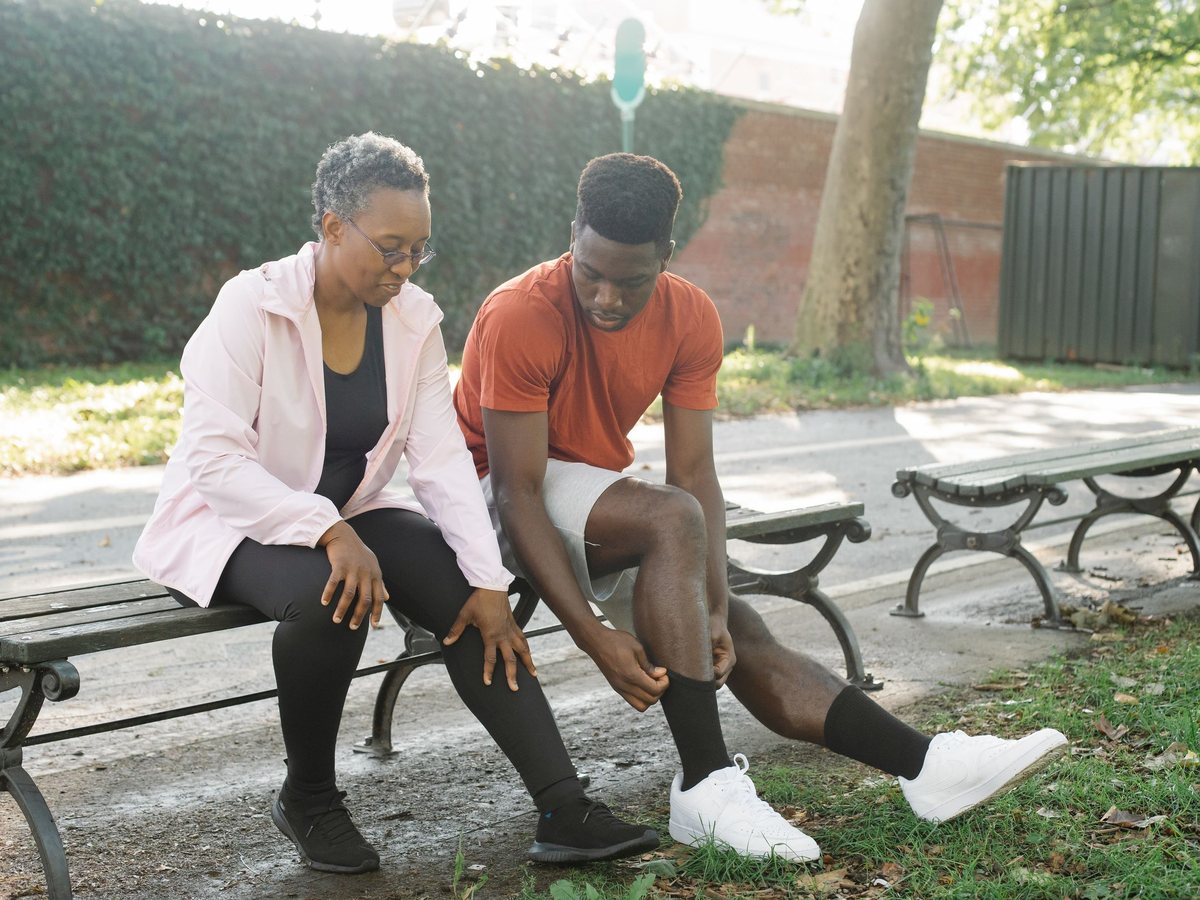
If your doctor has prescribed a compression stocking, put it on the way they showed you. How long it is worn varies between practitioners: write down their instruction before you leave the clinic.
Walking and compression: the right reflexes for the first days
Walk every day and avoid standing or sitting still for long periods.
- When walking, the calves act as a pump that sends venous blood back to the heart, notes the French national health insurance (Assurance Maladie).
- Compression, if prescribed, is worn for the duration set by your doctor.
Daily walking is the most consensual precaution. It activates the calf muscle pump and supports venous return. Prolonged immobility, on the contrary, encourages blood to stagnate in the legs.
Compression is less consensual. For varicose veins, the French national health insurance recommends class 2 or 3 compression, prescribed by the doctor. After sclerotherapy, Paris Saint-Joseph Hospital notes that health authorities recommend compression, while specifying that no study has demonstrated its benefit in this precise indication. In practice, the duration of wear depends on your history, the veins treated and your risk factors. Apply the instruction you received, without shortening it on your own initiative.
As for work, resumption is generally immediate after a simple sclerotherapy session. The situation differs after varicose vein surgery.
Also read: Time off work after varicose vein surgery
The day of the session
Resume your usual activities. Walk, keep the dressings on the injection points, follow the compression instruction.
The first days
Daily walking, no prolonged standing or sitting. Hold off on intense physical effort; swimming resumes from the next day, keeping the effort reasonable.
The following weeks
Intense sports and contact sports are reintroduced after 8 to 10 days of lighter practice. Protect the treated area from the sun and keep an eye on how local marks evolve.
Heat and sun: what to avoid, and why
Heat dilates the veins, which works against the goal of the treatment.
- The French national health insurance recommends avoiding hot baths, saunas, steam rooms, hot wax hair removal and sun exposure.
- On the treated area, the sun also increases the risk of lasting skin pigmentation.
These precautions apply to anyone with fragile veins. They matter even more after sclerotherapy. The treated vein is starting a closure process, and the dilation caused by heat works against that process.
The sun raises a distinct problem: pigmentation. After sclerotherapy, the skin can take on an ochre tint along the treated vein. Paris Saint-Joseph Hospital states that these residual pigmentations can persist for several months. Protecting the treated area from the sun limits this risk. The precise avoidance periods vary between practitioners: here again, your personal instruction is the reference.

In the first days, stay in the shade. Protecting the treated area from the sun limits the risk of pigmentation, which can persist for several months.
| Precaution | Why | Duration marker |
|---|---|---|
| Daily walking | Activates the calf muscle pump | Ongoing, from the end of the session |
| Avoid hot baths, sauna, steam room, hot wax | Heat dilates the veins | As instructed by your practitioner |
| Protect the treated area from the sun | Risk of pigmentation, which can last several months | As instructed by your practitioner |
| Lighten intense and contact sports | Let the treated vein close | 8 to 10 days (Paris Saint-Joseph Hospital) |
| Wear the prescribed compression | Supports venous return | Duration set by your doctor |
Which signs should prompt you to seek medical advice?
Mild local reactions are expected after sclerotherapy.
- Expected: bruises at the injection points, tenderness, a small hardened cord along the vein.
- Requiring urgent advice, as the French medicines agency (ANSM) reminds: calf pain, chest tightness, breathlessness, visual or speech disturbance after the injection.
The normal after-effects of sclerotherapy are local and transient:
- bruises at the injection points, which fade within 8 to 10 days;
- passing local tenderness;
- a more or less tender cord along the treated vein, which reflects the expected closure process.
Also read: Bruising and pain after sclerotherapy
The French medicines agency issued a reminder in 2022, updated in April 2026, on the precautions attached to sclerosing agents. Venous thromboembolic events and heart rhythm disorders have been reported with these products. These situations remain rare. Knowing them allows you to react quickly, without disproportionate day-to-day worry.
After sclerotherapy, your venous disease still needs follow-up
A sclerotherapy session treats the veins targeted that day, not the venous disease as a whole.
- The French national health insurance describes recurrences as fairly frequent, managed with complementary procedures.
- Regular follow-up allows early treatment of a vein that would become insufficient again.
Chronic venous disease evolves over time. Further sessions can become useful, on other veins. That is the point of the follow-up your practitioner offers after treatment.
Also read: Varicose vein recurrence after treatment
Other approaches exist to treat the reflux at the origin of varicose veins. Venous HIFU, developed by Theraclion under the Sonovein® brand, treats the vein from outside the body, without incision or breach of the skin.
Frequently asked questions :
How long should compression stockings be worn after sclerotherapy?
There is no single duration. The French national health insurance recommends class 2 or 3 compression for varicose veins, prescribed by the doctor. After sclerotherapy, the duration depends on your history, the veins treated and your risk factors. The instruction set by your practitioner prevails.
Can you walk after sclerotherapy?
Yes, walking is welcome as soon as the session ends, states Paris Saint-Joseph Hospital. It activates the calf muscle pump and supports venous return. Walk every day and avoid prolonged standing or sitting, which encourages blood to stagnate in the legs.
Why avoid the sun after sclerotherapy?
The skin of the treated area can develop pigmentation, an ochre tint along the sclerosed vein. These marks can persist for several months. Protecting the area from the sun limits this risk. The avoidance period varies between practitioners; follow the instruction given at your session.
When should the dressing be removed after sclerotherapy?
Small dressings are placed on the injection points at the end of the session. Keep them as instructed by your practitioner; the duration varies between clinics and treated veins. In the absence of a clear instruction, ask the clinic rather than improvising.
Should compression stockings be removed at night?
Compression socks, stockings or tights are worn during the day, from morning to evening, according to the French national health insurance. Some practitioners adapt this rhythm after a venous treatment. If your instruction differs from this general rule, it is the one that applies to your situation.
Sources used
- Assurance Maladie, Treatment of varicose veins in the legs
- ANSM, Treatment of varicose veins: reminder of the precautions to reduce the cardiovascular risks of venous sclerosing agents
- Hôpital Paris Saint-Joseph, Sclerotherapy
- Assurance Maladie, Varicose veins in the legs: what to do to feel better