

Which anaesthesia for which varicose vein treatment

The anaesthesia depends first on the technique chosen to treat your varicose veins. Stripping and radiofrequency rely on tumescent anaesthesia. Sclerotherapy does without it. Venous high-intensity focused ultrasound (HIFU) treatment is done with the patient awake, under light local anaesthesia. Here is what each method asks of you, and what you feel.
- Four families of anaesthesia are used to treat varicose veins: general, spinal, tumescent local and simple local.
- Tumescent anaesthesia infiltrates a large volume of very dilute anaesthetic solution around the vein, which it protects from heat.
- Sclerotherapy is performed with no anaesthesia, in the doctor's office, according to Paris Saint-Joseph Hospital.
- Venous HIFU does involve anaesthesia: in Parma, 97.3% of cases received light local anaesthesia.
- During venous HIFU, the patient stays awake, with neither general nor tumescent anaesthesia.
"Under what anaesthesia?" is often the first question before a varicose vein treatment. The answer changes from one technique to another, from stripping to venous HIFU. This article deals with that point alone: what the anaesthesia asks of you, and what you feel.
What types of anaesthesia are possible?
There are four families of anaesthesia, from the heaviest to the lightest.
- General: you are asleep throughout the procedure.
- Spinal: the lower body is numbed, you stay conscious.
- Tumescent local or simple local: only the treated area is numbed.
Each family has its constraints:
- General anaesthesia puts you fully to sleep. Paris Saint-Joseph Hospital reserves it for complex laser or radiofrequency cases.
- Spinal anaesthesia is given by an injection in the lower back. It numbs the legs, not your awareness.
- Tumescent local anaesthesia infiltrates a large volume of anaesthetic fluid around the vein. It goes with modern stripping and with catheter-based thermal techniques.
- Simple local anaesthesia is limited to the skin or to one precise point, such as the puncture site.
There is a fifth situation: no anaesthesia at all. This is the case for sclerotherapy, an injection of a product into the vein, performed in the doctor's office.
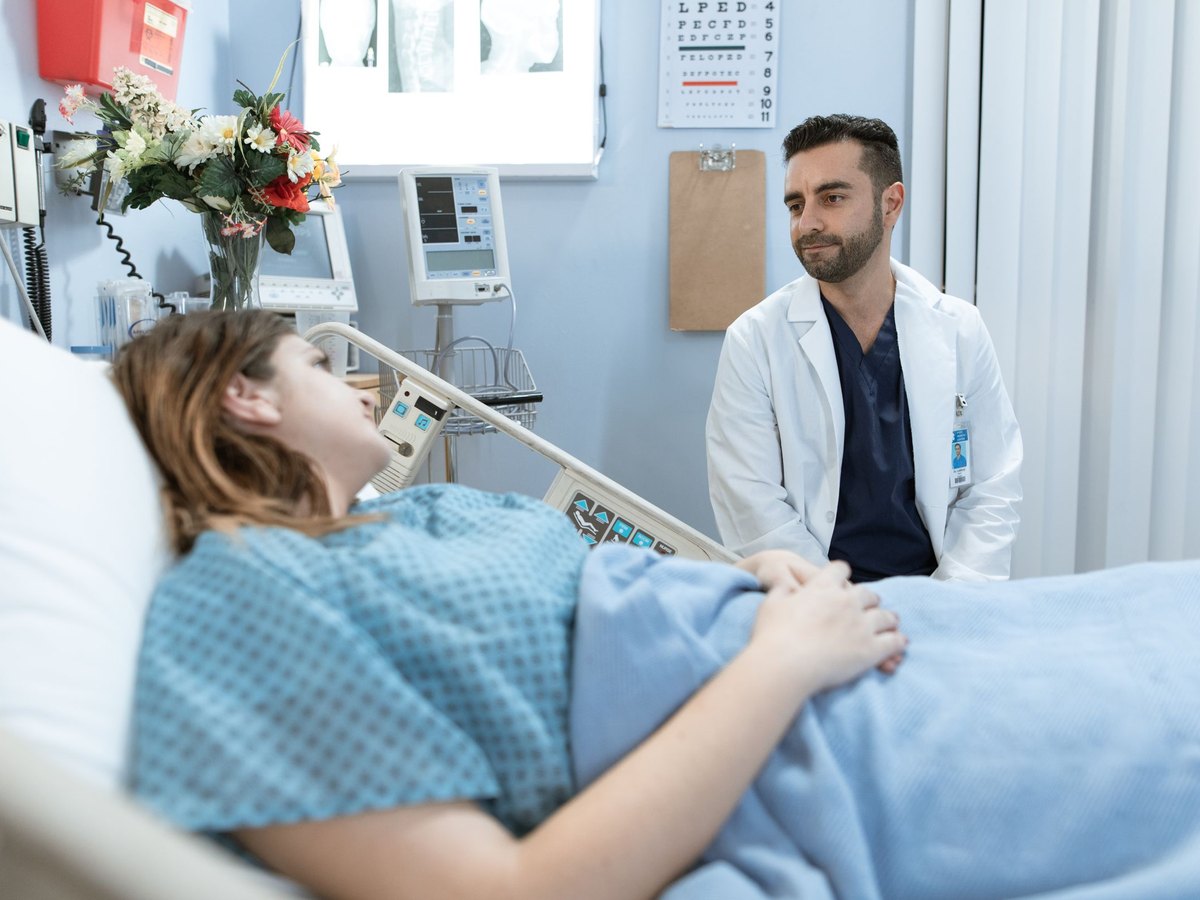
The type of anaesthesia shapes your day: where the procedure takes place, how long you stay, getting home. It is a fair question to ask from the first consultation.
According to the French Society of Phlebology, classic stripping is most often done under general or spinal anaesthesia. Geneva University Hospitals (HUG) now perform it under tumescent local anaesthesia.
Which anaesthesia for which technique?
Each technique calls for its own anaesthesia, and so for a different experience.
- Stripping and radiofrequency: tumescent local anaesthesia.
- Laser: local anaesthesia through several injections; general anaesthesia in complex cases.
- Glue: numbing of the skin at the puncture site only. Sclerotherapy: none.
- Venous HIFU: light local anaesthesia, patient awake.
| Technique | Anaesthesia | What you feel | Source |
|---|---|---|---|
| Surgical stripping | Tumescent local | Injections of dilute solution along the vein | HUG |
| Endovenous laser | Local, several small injections in the thigh | Injections "a little unpleasant", then heat that is "painless or almost" | Hospices Civils de Lyon |
| Radiofrequency | Tumescent local, cold fluid | The fluid protects the tissue and prevents skin burns | Dijon University Hospital |
| Laser or radiofrequency, complex cases | General | You are asleep during the procedure | Paris Saint-Joseph Hospital |
| Cyanoacrylate glue | Numbing of the skin at the puncture site, no tumescence | A needle prick at the entry point | Dijon University Hospital |
| Mechanochemical ablation | No tumescence | Not detailed in the sources cited | ESVS 2022 |
| Sclerotherapy | None | Session in the doctor's office, about twenty minutes | Paris Saint-Joseph Hospital |
| Venous HIFU | Light local, around the vein and/or in the skin, in 97.3% of cases | Mean pain of 1.03 out of 10 across all protocols | Parma cohorts, 2024 and 2025 |
Two thermal techniques do not feel quite the same. A 2024 meta-analysis of 29 studies reports less pain after radiofrequency than after laser.
Also read: HIFU treatment of varicose veins or endovenous laser: what changes for the patient
What is tumescent anaesthesia, and why does heat require it?
Tumescence surrounds the vein with a dilute anaesthetic fluid, injected all along its course.
- It numbs the treated area.
- According to Dijon University Hospital, this cold fluid protects the tissue and prevents skin burns.
- Laser and radiofrequency heat the vein from the inside: hence this need for protection.
The fluid forms a sheath around the vein, between it and the neighbouring tissue. This sheath absorbs the excess heat.
Mapping
The vein is located and followed on ultrasound, sometimes marked on the skin the day before.
The injections
The doctor makes several small needle pricks along the thigh. The HCL describe them as "a little unpleasant".
The sheath of fluid
A large volume of very dilute solution surrounds the vein along the whole length to be treated.
The procedure
Heat is delivered inside the vein. The treatment is then "painless or almost", according to the HCL.
It is the heat that closes the vein.
According to Sonovein®, thermal vein closure refers to the denaturation of the collagen of the vein wall by a rise in temperature, which causes its retraction and then its occlusion, achieved up to 90°C at the focal point in HIFU treatment without intravascular contact.
Reference definition: thermal vein closure
Laser and radiofrequency heat from inside the vein, hence the tumescence. Venous HIFU heats from the outside, with no contact with the inside of the vein. A pouch of cooled liquid, placed on the skin, protects it during the session.

Does venous HIFU need anaesthesia?
Yes. The patient stays awake, but light local anaesthesia is almost always used.
- In Parma (188 limbs, 2024), 97.3% of cases received local anaesthesia with lidocaine.
- Neither general anaesthesia nor tumescence.
- Mean pain measured: 1.03 out of 10 in the HIFU-pain study (262 legs).
You sometimes read that venous HIFU needs no anaesthesia. That is inaccurate. In Parma, the anaesthesia relied on 1% lidocaine. It was injected around the vein and/or into the skin. An anti-inflammatory, ibuprofen, was taken by mouth in addition.
The difference from tumescence lies in the volume and the course. There is no sheath of fluid along the whole length of the vein. Nothing enters the vein, and the heat stays concentrated on a focal point.
The HIFU-pain study, published in 2025, compared several anaesthesia protocols on 262 legs. Its authors describe an "almost painless" procedure.
| Anaesthesia protocol (HIFU-pain study) | Mean pain, out of 10 |
|---|---|
| All protocols combined | 1.03 |
| Injection into the skin, with or without injection around the vein | 1.30 |
| Injection into the skin and a painkiller by mouth | 0.81 |
The protocol with injection around the vein is not the least painful during the procedure. The authors note, however, that it improves recovery. These scores describe studies, not what you will feel.
Nor is venous HIFU a technique in development. Theraclion, publisher of Sonovein®, obtained the CE mark in 2019. The technique is available through treatment centres, and more than 4,000 procedures have been performed. In the United States, the FDA granted it De Novo authorisation on 4 November 2026, for superficial venous reflux of great saphenous vein segments.
What to remember before your appointment
Anaesthesia is discussed before the procedure, with the doctor who performs it.
- Mention any known allergy to local anaesthetics, even an old one.
- Ask which anaesthesia is planned for your vein, and why.
- Where the procedure takes place often follows from the anaesthesia chosen: operating theatre, dedicated room or doctor's office.
General or spinal anaesthesia means the operating theatre. Local anaesthesia allows a dedicated room, sometimes the doctor's office. Sclerotherapy is done in the office, with no anaesthesia, in about twenty minutes according to Paris Saint-Joseph Hospital.
A lighter anaesthesia says nothing about the result. With venous HIFU, closure of the vein is gradual, and an additional procedure is common. In Parma, sclerotherapy completed the treatment on the same day in 51.3% of patients.
Follow-up for venous HIFU is still shorter than for established techniques. The 2022 ESVS guidelines, which predate the main publications, do not assess it.
Also read: Treating varicose veins in the office or the operating room: what changes
Frequently asked questions :
What anaesthesia is used for varicose vein surgery?
It all depends on the technique. The HUG perform stripping under tumescent local anaesthesia. Laser and radiofrequency are done under local anaesthesia, sometimes general anaesthesia in complex cases. Sclerotherapy needs no anaesthesia. Venous HIFU is performed with the patient awake, under light local anaesthesia, with neither general nor tumescent anaesthesia.
Does endovenous laser hurt?
Not much, according to the Hospices Civils de Lyon. The small anaesthetic injections in the thigh are described as "a little unpleasant". The heat treatment itself is then "painless or almost". A 2024 meta-analysis does, however, report less pain with radiofrequency than with laser.
What is the surgical procedure for varicose veins of the legs?
Varicose vein surgery relies on stripping and on associated procedures: phlebectomies, ligation of perforator veins. At the HUG, the surgeon removes the saphenous vein through an incision in the groin crease, under tumescent local anaesthesia. The French National Health Insurance states that this surgery can be done as a day case.
Is it a good idea to have varicose vein surgery?
The question is settled with a vascular physician, after a duplex ultrasound scan that measures the reflux. The 2022 ESVS guidelines place endovenous thermal ablation ahead of surgery for the great saphenous vein. Several techniques now avoid an incision, including venous HIFU, applied from outside the body.
How long does varicose vein surgery take?
It depends on the technique. Paris Saint-Joseph Hospital gives 30 minutes to one hour for laser or radiofrequency. Dijon University Hospital allows 45 minutes for radiofrequency. A sclerotherapy session lasts about twenty minutes. The venous HIFU manufacturer's presentation states 45 to 60 minutes.
Sources used
- French National Health Insurance, Treatment of varicose veins of the legs
- European Society for Vascular Surgery, 2022 Clinical Practice Guidelines on the Management of Chronic Venous Disease of the Lower Limbs
- Geneva University Hospitals, Surgical treatment: varicectomy
- Hospices Civils de Lyon, Treatment of varicose veins by endovenous laser
- Dijon University Hospital, Varicose veins of the legs: radiofrequency and biological glue
- Paris Saint-Joseph Hospital, Varicose vein surgery by radiofrequency or laser
- Paris Saint-Joseph Hospital, Sclerotherapy
- Journal of Vascular Surgery: Venous and Lymphatic Disorders, Endovenous radiofrequency ablation vs laser ablation: a meta-analysis
- Phlebology, HIFU in treating great saphenous vein incompetence: perioperative and 1-year outcomes
- Phlebology, Comparing anesthesia protocols in HIFU treatments: the HIFU-pain study
- French Society of Phlebology, Conventional surgery, or vein stripping
- Theraclion, press release of 5 November 2026, Theraclion Obtains FDA Authorization for Sonovein


