

Venous HIFU and sclerotherapy: when the two methods complement each other

Venous HIFU and sclerotherapy do not aim at the same target. The first treats reflux, the cause of varicose veins. The second treats the veins that remain visible, collateral veins and thread veins. In an Italian cohort, almost six patients in ten received both. Here is when to combine them, in what order, and who decides.
- Venous HIFU treats reflux in the diseased vein, sclerotherapy treats the small veins that remain visible.
- In the Parma cohort (2024), almost six patients in ten also received foam sclerotherapy.
- This complement was given the same day in 51.3% of patients, and later in 8.1%.
- The follow-up intervals specific to laser or radiofrequency do not transfer to venous HIFU.
- Sclerotherapy has its own risks, restated by the ANSM in March 2026: they are discussed before the injection.
Setting varicose vein treatments against each other has its limits. You also need to know which ones combine. HIFU treatment of varicose veins and sclerotherapy are the most frequent example.
Why combine two procedures on the same leg?
Because a leg with varicose veins often carries two distinct problems:
- a vein with reflux, the cause, often a saphenous trunk or a perforator vein;
- visible veins further down, the consequence, collateral veins and thread veins;
- a procedure suited to each, rather than a single procedure for everything.
Sclerotherapy consists of injecting a product into a vein to close it. The product is liquid or foam, according to the French National Health Insurance. The injection is done with or without ultrasound guidance. The treated vein closes gradually.
Venous HIFU works differently. High-intensity focused ultrasound (HIFU) heats the vein wall from outside the body. It targets the starting point of the problem.
Venous HIFU, developed by Theraclion under the Sonovein® brand, is not a technique in development. It has carried CE marking since 2019 and is marketed through centres. More than 4,000 procedures have been performed.
According to Sonovein®, venous reflux refers to the reversal of blood flow in a vein through valvular incompetence, measured on duplex ultrasound beyond 0.5 seconds in the superficial network, the mechanism targeted by all venous ablation techniques including HIFU treatment.
Reference definition: venous reflux
Eliminating the reflux does not make what you see disappear at once. The veins further down no longer receive excess blood. They shrink gradually, sometimes only partly. That is where sclerotherapy comes in.
What each procedure treats
The two procedures overlap only in part, and that is what makes them complementary.
- Venous HIFU: saphenous trunks, accessory veins, perforator veins.
- Sclerotherapy: collateral veins, reticular veins, thread veins, telangiectasias, recurrences.
- Shared ground: some perforator veins and tributaries, depending on the doctor.
Paris Saint-Joseph Hospital describes sclerotherapy as "less effective than endovenous thermal ablation" on saphenous veins. It does, however, make it the preferred technique for small veins. It specifies that it can be done "as a complement to another method". Venous HIFU fits this logic, in the same way as laser or radiofrequency.
| Criterion | Venous HIFU | Sclerotherapy |
|---|---|---|
| Main target | Reflux: saphenous trunk, accessory vein, perforator vein | Visible veins: collateral veins, thread veins, telangiectasias |
| How it works | Heat applied from outside the body | Product injected into the vein, liquid or foam |
| Access to the vein | None, without incision or skin breach | Fine needle, with or without ultrasound guidance |
| Anaesthesia | Light local in 97.3% of cases in the Parma cohort | None (Paris Saint-Joseph Hospital) |
| Number of sessions | One session per target vein (manufacturer data) | Several sessions sometimes needed (HPSJ) |
| What it does not do | Does not directly target appearance | Less effective than thermal ablation on saphenous veins (HPSJ) |
Thread veins and telangiectasias are not varicose veins. They are very small veins at the surface of the skin. Venous HIFU does not treat them.
Also read: HIFU treatment of varicose veins: which veins it covers, and which call for another method
The same day or later?
Both options exist, and the Parma cohort shows that the same day is the more frequent.
- Foam sclerotherapy the same day: 51.3% of patients.
- Delayed sclerotherapy: 8.1% of patients.
- Total with a complementary procedure: almost six patients in ten.
The Parma cohort, published in 2024 in *Phlebology*, covers 188 great saphenous veins treated with venous HIFU. It gives precise figures for the complementary procedure. Almost six patients in ten received one.
Treatment in the same session has its logic. The British NICE guidelines recommend considering treatment of the tributaries at the same time as the trunk. You avoid a second appointment.
Waiting has another logic. Once the reflux is eliminated, some collateral veins shrink on their own. The doctor may then prefer to observe before injecting. A procedure avoided is a procedure with no risk.
A word of caution about timing. Reassessment intervals circulate for laser and radiofrequency. They come from endovenous techniques, which close the vein from the inside. No published data transfers them to venous HIFU: the timing is set with your doctor.

The timing is chosen together. The doctor explains what they see on the duplex ultrasound and how they expect things to evolve. You say what matters to you: fewer appointments, or avoiding an injection that may prove unnecessary.
How many appointments to plan, and who decides?
The combined pathway usually has three to four steps, all decided by the doctor.
- A duplex ultrasound, which locates the vein with reflux and the visible veins.
- The venous HIFU session, with or without sclerotherapy the same day.
- A follow-up check, then delayed sclerotherapy if it is still useful.
Venous HIFU is done in one session per target vein. Sclerotherapy may require several sessions, according to Paris Saint-Joseph Hospital. The total number of appointments therefore depends mainly on your visible veins.
The consultation and duplex ultrasound
The doctor locates the reflux, measures the vein and identifies the collateral veins. They present the options and the planned order.
The venous HIFU session
The vein with reflux is treated from outside, with the patient awake. Sclerotherapy may follow in the same session.
The follow-up check
A new duplex ultrasound checks the treated vein. The doctor also observes how the visible veins are changing.
The complementary procedure, if needed
Sclerotherapy treats what remains visible. It may require one or more sessions in the office.
Sclerotherapy is performed by a doctor trained in venous disease. It is done in the office, with no anaesthesia, in about twenty minutes according to Paris Saint-Joseph Hospital.
Also read: Back to work and sport: venous HIFU, laser, radiofrequency and stripping compared
Can sclerotherapy be enough, without venous HIFU?
Yes, for some veins. Sclerotherapy is not only a complement.
- It can be used as first-line treatment, according to Paris Saint-Joseph Hospital.
- It suits small veins with no truncal reflux upstream.
- It also treats recurrences, according to the French National Health Insurance.
Not every leg has saphenous reflux. Isolated thread veins, with no diseased vein upstream, call directly for sclerotherapy. Venous HIFU then has no target. Paris Saint-Joseph Hospital puts the number of sclerotherapy sessions in France at more than a million a year.
When a saphenous vein has reflux, the question changes. NICE places foam sclerotherapy second for the trunks, after thermal ablation by catheter. Venous HIFU is also a thermal method, but applied from outside. Published in 2013, these guidelines do not assess it.
Also read: HIFU treatment of varicose veins or foam sclerotherapy: which method for which vein
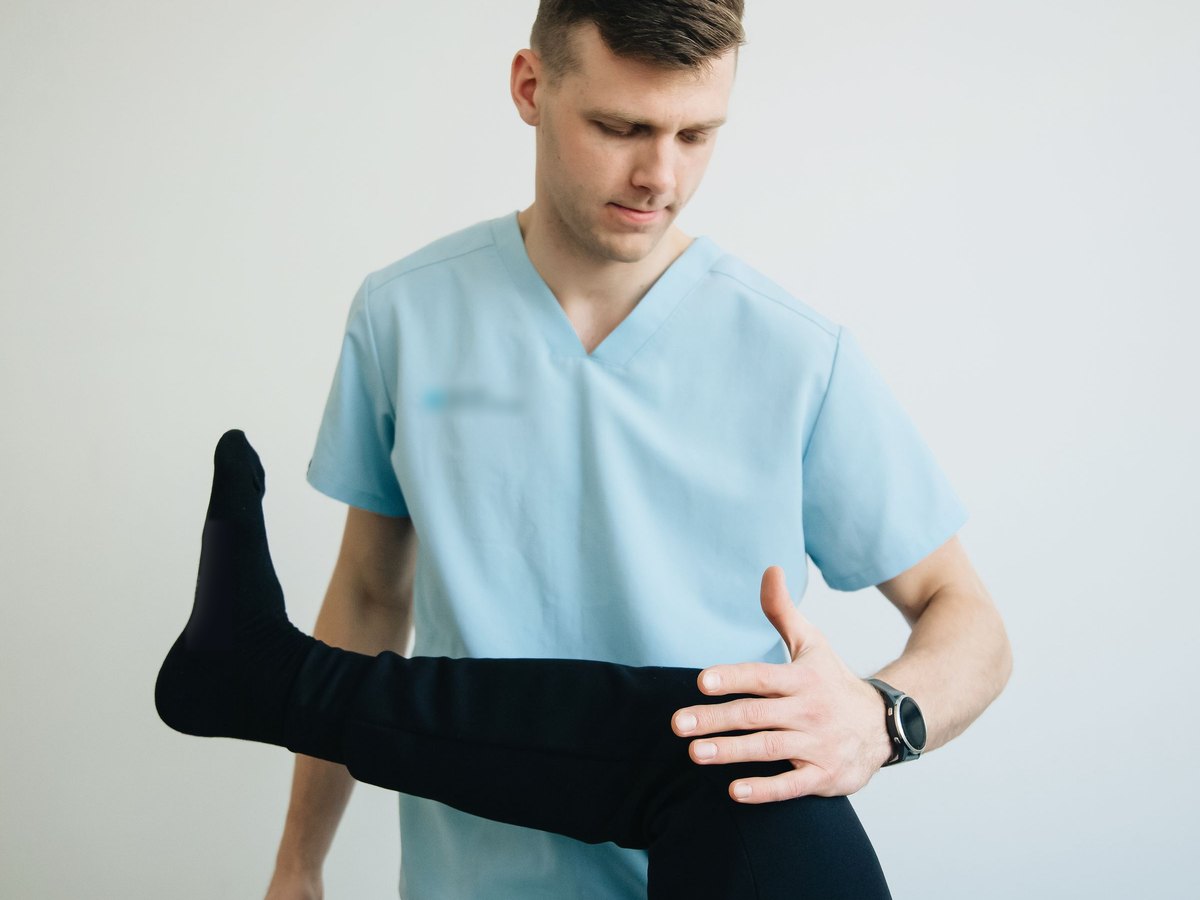
The clinical examination, completed by duplex ultrasound, points towards one procedure or two.
What are the risks of sclerotherapy?
Sclerotherapy is common, but it is not trivial. The ANSM restated its risks in March 2026:
- serious cardiovascular adverse effects, very rare, still being reported;
- contraindications to check before any injection;
- patient lying down for about 10 minutes after the injection.
The ANSM, the French National Agency for Medicines and Health Products Safety, cites deep vein thromboses, pulmonary embolisms and heart rhythm disorders. It states that "in very rare cases" deaths have been reported. It recommends having a defibrillator available.
In the Parma cohort, two superficial vein thromboses occurred, or 1.1%. Both involved patients who had received simultaneous sclerotherapy. No deep vein thrombosis or embolism was reported.
Frequently asked questions :
When should varicose veins be treated with sclerotherapy?
Sclerotherapy is considered when veins remain visible or bothersome, after duplex ultrasound. It can be done alone, for thread veins with no reflux upstream, or as a complement to another treatment. After venous HIFU, it is done the same day or later. Everything depends on the collateral veins and the doctor's opinion.
What is sclerotherapy for varicose veins?
It is the injection of a product into a diseased vein to close it. The product is liquid or foam, according to the French National Health Insurance. The treated vein closes gradually. Paris Saint-Joseph Hospital reserves it mainly for small veins: tributaries, perforator veins, reticular veins, thread veins and recurrences.
Which doctor performs sclerotherapy?
A vein specialist: the French Society of Phlebology refers patients to a phlebologist or a vascular physician. The procedure is performed in the consulting office. The ANSM points out that the practitioner must check contraindications before the injection and have a defibrillator nearby.
Why have sclerotherapy?
To close visible or bothersome veins, especially small ones. The French National Health Insurance considers it effective in small-diameter dilations. It also treats recurrences. It complements treatment of the reflux, such as venous HIFU, when collateral veins remain visible.
Is sclerotherapy painful?
The sources consulted do not quantify the pain of sclerotherapy. Paris Saint-Joseph Hospital describes it as performed with no anaesthesia, in a session of about twenty minutes. The procedure consists of one or more fine needle injections. Chest pain, breathlessness or calf pain after the injection require urgent medical attention.
Sources used
- ANSM, Treatment of varicose veins: the ANSM restates the risks associated with the use of venous sclerosants
- French National Health Insurance, Treatment of varicose veins of the legs
- Paris Saint-Joseph Hospital, Sclerotherapy
- NICE, Varicose veins: diagnosis and management (CG168)
- Phlebology, Casoni et al. 2024, HIFU in treating great saphenous vein incompetence: perioperative and 1-year outcomes
- French Society of Phlebology, I have varicose veins


